
Feeding Children


The Satter Feeding Dynamics Model
The Satter Feeding Dynamics Model (fdSatter) is trust-based responsive feeding, grounded in children’s capabilities with eating and growth. All children are born wanting to eat, knowing how much to eat, and able to grow in the way that is right for them.
fdSatter is implemented with the Satter Division of Responsibility in Feeding (sDOR). sDOR works because it is good parenting—authoritative parenting. It supports parents in taking kind and nurturing leadership with feeding and giving children trusting and respectful autonomy with eating.
When parents follow sDOR, children feel good about eating, are comfortable in the presence of unfamiliar food, eat as much as they need to grow predictably, and are relaxed about joining in with family meals and structured snacks. Children eat as much or little as they need,1, 2 gradually accept new food,2-9 and maintain energy balance and consistent growth1, 10, 11 that reflects their genetic endowment.12, 13
All children—even those who are ill or need particular help with maintaining their nutritional status—can be fed following sDOR. The task of their grownups—parents, teachers, and their advisors—is to raise them to have positive eating attitudes and behaviors. Setting aside expectations that parents should get children to eat certain amounts and types of food lets parents accurately follow sDOR and raise children to enjoy an increasing variety of food for a lifetime.
References
- Fomon SJ, Filer LJ, Jr., Thomas LN. Influence of formula concentration on caloric intake and growth of normal infants. Acta Paediatr Scand. 1975;64:172–181.
- Birch LL, Deysher M. Caloric compensation and sensory specific satiety: Evidence for self regulation of food intake by young children. Appetite. 1986;7:323–331.
- Birch LL, Fisher JO. Appetite and eating behavior in children. Pediatr Clin North Am. 1995;42:931–953.
- Addessi E, Galloway AT, Visalberghi E. Specific social influences on the acceptance of novel foods in 2-5-year-old children. Appetite. 2005;45:264–271.
- Wardle J, Herrera ML, Cooke L. Modifying children’s food preferences: the effects of exposure and reward on acceptance of an unfamiliar vegetable. European Journal of Clinical Nutrition. 2003;57:341–348.
- Davis CM. Self selection of diet by newly weaned infants: An experimental study. Am J Dis Child. 1928;36:651–679.
- Beal VA. Dietary intake of individuals followed through infancy and childhood. American Journal of Public Health. 1961;51:1107–1117.
- Davis CM. Self-selection of food by children. The American Journal of Nursing. 1935;35:403–410.
- Nas Z, Herle M, Kininmonth AR. Nature and nurture in fussy eating from toddlerhood to early adolescence: findings from the Gemini twin cohort. Journal of Child Psychology and Psychiatry. 2024. doi:10.1111/jcpp.14053
- Pietilainen KH, Kaprio J, Rasanen M. Tracking of body size from birth to late adolescence: contributions of birth length, birth weight, duration of gestation, parents’ body size, and twinship. Am J Epidemiol. Jul 1 2001;154:21–29.
- O’Connor EA, Evans CV, Burda BU. Screening for obesity and intervention for weight management in children and adolescents: evidence report and systematic review for the US Preventive Services Task Force. JAMA. 2017;317:2427–2444.
- Garn SM, Clark DC. Trends in fatness and the origins of obesity. Pediatrics. 1976;57:443–456.
- Whitaker KL, Jarvis MJ, Boniface D. The intergenerational transmission of thinness. Arch Pediatr Adolesc Med. 2011;165:900–905.
The Satter Division of Responsibility in Feeding
The Satter Division of Responsibility in Feeding (sDOR) encourages adult caregivers to take leadership with the what, when, and where of feeding and give children autonomy with the how much and whether of eating. Satter Division of Responsibility in Feeding (sDOR) applies at every stage in the child’s development, from infancy through the early years through adolescence.

The parent is responsible for what children are offered to eat. The child is responsible for how much and whether to eat of the foods offered. The Satter Division of Responsibility in Feeding (sDOR) says to feed infants on demand, letting them determine the timing and tempo of feeding. As the child develops and becomes more regular in their eating patterns, the parent gradually takes on responsibility for when and where the child is fed. Later still, during the later school-age years and adolescence, children gradually take responsibility for when, where, and what they will eat. However, until children leave home, parents can expect children to arrive at family meals hungry and on time.
Most children are ready to join in with the meals-plus-snacks routine of family by the end of the first year or the beginning of the second year. After that, parents need to maintain the structure of family meals and sit-down snacks throughout the growing-up years.
When parents do their jobs with feeding, children do their jobs with eating.

sDOR Encourages Adults to Take Responsibility for Feeding, Including:
- Choosing and preparing food
- Providing regular meals and snacks.
- Making eating times pleasant
- Showing children by example, how to interact at family mealtimes.
- Being considerate of children’s lack of food experience without catering to likes and dislikes
- Not letting children have food or beverages (except for water) between meal and snack times.
- Letting children grow into bodies that are right for them
An essential part of sDOR is for adults to trust children to be capable with eating, including:
- Eating the amount they need
- Learning to eat the food their parents/caregivers eat
- Growing predictably in the way that is right for them
- Learning to interact at mealtime

Read about the development and validation of the sDOR.2-6y™ Inventory in the Journal of Nutrition Education and Behavior and the Journal of the Academy of Nutrition and Dietetics.
Following sDOR is Associated with Lower Child Nutritional Risk
sDOR.2-6yTM directly assesses sDOR adherence in parents of 24- to 72-month-old children1, 2 by addressing both and only the degree to which parents take leadership with feeding and give their child autonomy with eating. Parents who tested high on sDOR.2-6yTM avoided feeding pressure and restriction.2 They also had higher EatC as measured by ecSI 2.0TM,3 better sleep quality, more-positive psychosocial functioning, lower stress, and lower levels of uncontrolled or emotional eating.2

Assessing adherence to sDOR gives parents and professionals an achievable way to address their biggest feeding worry: that children are doing well nutritionally.2 Children of parents who follow sDOR, who score high on sDOR.2-6yTM, have lower nutritional risk. Because they are relaxed about joining in with family meals and structured snacks, children benefit from repeated neutral exposure to food. They push themselves along to eat the food their trusted grownups eat.4 The goal of sDOR is not to get children to eat target foods today: It is to allow them to enjoy a variety of food for a lifetime. Children add variety to their diets throughout their growing-up years, but only if they are not pressured in the meantime.
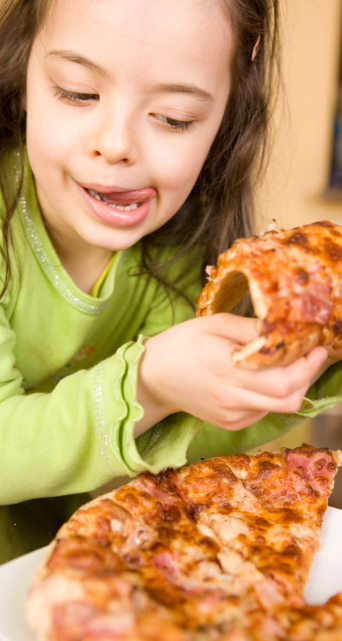
Relaxing about children’s eating means a lot! Validation results support what parents say: When feeding goes well, they and their children feel better all day. Adults who feed well—who score high on sDOR.2-6y™ see their children as doing better overall,2 and they are more likely to describe their children as being “good eaters.” 5
Adults who feel secure and comfortable with getting enough to eat learn and grow in their ability to manage food and achieve dietary variety. Those eating-competent adults are able to trust children to eat well and grow up positively with eating at the same time as they learn from their child what it looks like to be self-trusting with eating.6
References
- Lohse B, Satter E. Use of an observational comparative strategy demonstrated construct validity of a measure to assess adherence to the Satter Division of Responsibility in Feeding. Journal of the Academy of Nutrition and Dietetics. 2021;121:1143–1156.e6.
- Lohse B, Mitchell DC. Valid and reliable measure of adherence to Satter Division of Responsibility in Feeding. J Nutr Educ Behav. 2021;53:211–222.
- Krall JS, Lohse B. Validation of a measure of the Satter Eating Competence model with low-income females. Int J Behav Nutr Phys Act. 2011;8. doi:10.1186/1479-5868-8-26
- Satter E. Hierarchy of food needs. J Nutr Educ Behav. 2007;39:S187–S188.
- Lohse B, Satter E, Arnold K. Development of a tool to assess adherence to a model of the division of responsibility in feeding young children: using response mapping to capacitate validation measures. Child Obes. 2014;10:153–168.
- Satter E. ecSatter is Correlated with Superior Wellness Indicators. Ellyn Satter Institute. https://www.ellynsatterinstitute.org/wp-content/uploads/2022/03/2022-ecSatter-wellness-indicators.pdf
Agencies recognize the Satter Division of Responsibility in Feeding (sDOR) as best practice! sDOR is a core component of the feeding messages developed for preschool-aged children by:
The Academy of Nutrition and Dietetics Nutrition Guidelines align with the Satter Division of Responsibility in Feeding.
Parent Leadership:
The Academy, through its publications and guidance, emphasizes that parents should be responsible for the “what, when, and where” of feeding, meaning providing a variety of food options, regular meal and snack times, and a positive eating environment.
Child Autonomy:
The Academy recognizes the importance of children having the autonomy to decide “how much and whether” to eat of what is offered, allowing them to develop their internal hunger and fullness cues.
Positive Feeding Environment:
The Academy promotes creating a positive and enjoyable feeding experience for both parents and children, which aligns with the principles of sDOR.
Focus on Healthy Eating Behaviors:
The Academy’s focus on promoting healthy eating behaviors and positive relationships with food aligns with the goals of sDOR, which aims to foster eating competence and reduce the risk of disordered eating.