The Satter Division Of Responsibility In Feeding
As a parent or caregiver, feeding children is one of the most important jobs you have – and it can also be the most challenging. At times you might be concerned the child is eating too little, too much, or perhaps not eating enough of the “right” foods.
Following the Satter Division of Responsibility in Feeding (sDOR) can help alleviate this stress and set you and your child up for success.
What is the Satter Division of Responsibility?
The Satter Division of Responsibility (sDOR) is endorsed by the Academy of Pediatrics as a proven approach for feeding children. This approach clearly outlines the adult’s role and child’s role in feeding. For many caregivers, learning their specific roles makes meal and snack experiences more enjoyable because it promotes a positive feeding relationship.
Why follow the Satter Division of Responsibility in Feeding?
sDOR offers you a way out of power struggles, tantrums, and frustrations at eating times and allows you to focus on what really matters—being a loving, supportive caregiver to your child and trusting they are capable with eating.
When you take the lead and begin feeding your child this way, they will have the space and support they need to eat in a way that is right for them. Without interfering, you can trust your child to know how much to eat and to learn to eat the food you eat. It takes time, but they will get there!
As the adult, your jobs are:

Choose food you enjoy
for family meals and snacks.

Have those family meals and snacks
at regular times. No food or drink handouts.

Choose a place to eat together.
A table isn’t necessary. Anywhere you sit down is just fine.
As an ADULT, you can trust your child at meals and snacks TO determine:

How much to eat
of the food that you offer.

Whether or not to eat
the food that you offer.
“But, How Do I Get My Child to Eat?”
It’s a question we hear often—and the concern behind it is completely understandable. But the truth is, trying to “get” your child to eat isn’t the most helpful goal.
A better question is: “How can I feed my child so they can feel relaxed and positive about eating?”
Shifting from emphasizing what to considering your child’s feelings can make all the difference. By following sDOR, mealtimes become more peaceful and positive—and your child will eat well.
If you’ve pressured or interfered with your child’s eating in the past, their negative eating behaviors may get more extreme for a while. Hang in there. They will settle down to eating what and as much as they need—and to feeling good about food and eating.
The Feeding Relationship Grows, Too
As your child grows, the way you apply sDOR will change, but it remains just as important—even when your child gets into adolescence.
By consistently following sDOR, you help your child grow up to apply sDOR to themselves: To feed themselves faithfully and give themselves permission to eat. They will become eating competent.
Stay in Your Lane
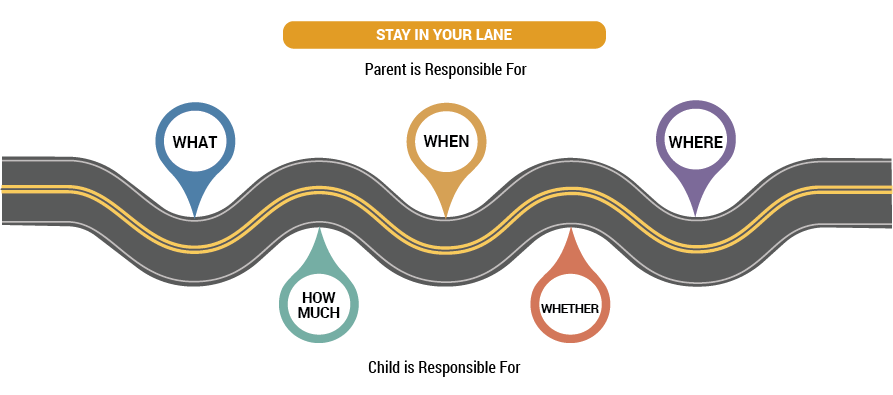
Think of feeding your child like this: You’re in one lane, and your child is in the other. The sDOR is the double yellow line between you—it sets clear boundaries and keeps things on track.
When you stay in your lane (providing the what, when, and where of feeding), and let your child stay in theirs (determining whether and how much of eating), mealtimes are pleasant and relaxing. You and your child are both free to enjoy the ride—together.